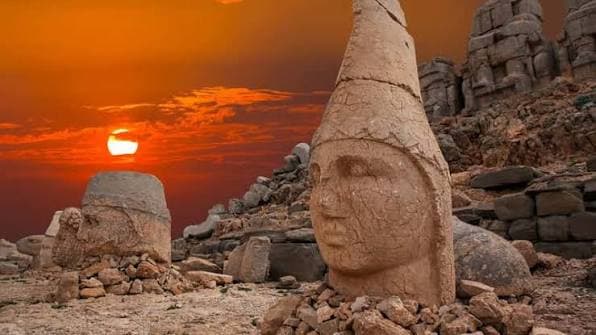
The monument atop the more-than-2,100-meter summit of Mount Nemrut was built by King Antiochus I of Commagene (70-31 BCE) as both his own tomb and a sanctuary (hierothesion) dedicated to the gods. Commagene was a kingdom at the crossroads of Hellenistic Greek and Persian cultures, so Antiochus honored the gods with both Greek and Persian names.
The colossal statues on the summit were rediscovered in 1881. The monument was inscribed on the UNESCO World Heritage List in 1987.
Highlights
50-meter tumulus
An artificial mound of crushed limestone, most likely containing Antiochus's tomb; it stood about 70 meters high when first built.
East and West terraces
Each terrace holds seated statues of the gods (Zeus, Apollo, Heracles, and the goddess of Commagene) as well as a statue of the king himself, reaching heights of 8-9 meters.
Lion and eagle statues
Placed at the edges of the terraces as guardian figures.
Sunrise/sunset views
The statues' heads have separated from their bodies over time; sunrise in particular creates dramatic lighting.