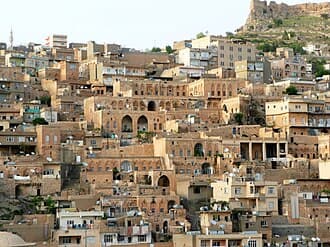
Mardin sits on the southern slopes of the Mardin-Midyat threshold, on a strategic ridge overlooking the Mesopotamian plain. Although first mentioned by name in the 4th century, prehistoric traces have also been found on the southern part of the hill. Throughout history the city was a center where different religions and peoples (Muslim, Syriac Christian, Armenian, Jewish) lived side by side.
One of the city's most magnificent buildings, the Zinciriye (Sultan Isa) Madrasa, was completed in 1385 by the Artuqid ruler Necmeddin İsa. The Deyrulzafaran Monastery, 5 km from Mardin, was founded in the 4th century and served as the patriarchal seat of the Syriac Orthodox Church between 1293 and 1932.
Highlights
Zinciriye Madrasa
One of the finest examples of Artuqid architecture; with its courtyard, mosque, mausoleum, and fluted domes, it overlooks the Mardin plain.
Deyrulzafaran Monastery
The historic seat of the Syriac Orthodox Church; it contains a special section preserving the tombs of 52 patriarchs.
Stone mansion architecture
Traditional Mardin houses built of yellow limestone with arched windows, listed on UNESCO's tentative heritage list.
Telkari silver filigree
A fine silver-wire craft developed by Syriac artisans, still produced in the bazaars today.
Living Today
Who lives on this land today — what they cook, what they tell.
Bakır Ustalarının Sokağı
Birinci Cadde'de sabahlar çekiç sesiyle başlar. Bakır ustaları tepsiyi, cezveyi, mangalı hâlâ elde döver; çırak yanında oturur, önce sesi öğrenir, sonra vurmayı.
Aynı Yamaçta Farklı Sesler
Cami, kilise ve manastır aynı yamacı paylaşır. Sabah ezanı ile çan sesi birbirini bastırmaz — Mardin'de yüzyıllardır böyle duyulur.
Sofradaki Ortak Hafıza
Kaburga dolması, ikbebet, sembusek… Mardin mutfağı Süryani, Arap ve Kürt izlerini ayrı ayrı değil, aynı tabakta taşır.