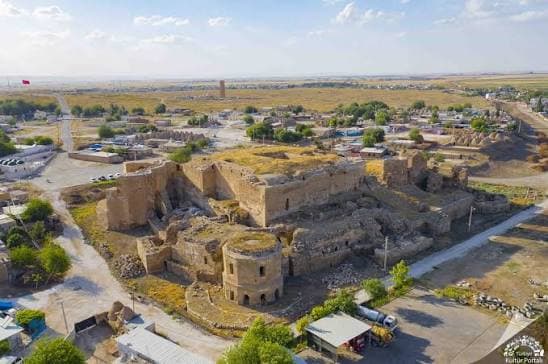
Harran is a district south of Şanlıurfa, close to the Syrian border. Its name, meaning "caravan/travel route" in Sumerian and Akkadian, sat at the crossroads of Anatolian-Syrian-Mesopotamian trade routes in antiquity. Settled since the time of the Sumerians, Assyrians, Babylonians, and Hittites, Harran briefly became the capital of the Umayyad Caliphate in 744.
The city was an important center of learning in the Middle Ages; the name of Harran University keeps this legacy alive. Today it is best known for its beehive-domed houses, a tradition dating back to the 6th century BCE and one of the oldest conical-dome house traditions in the world.
Highlights
Beehive-domed houses
Each dome represents a room; the number of domes indicated a family's wealth. With no windows or glass, the domes' tops were left open to let light and smoke escape.
Harran Castle
The city's defensive structure bears traces of repairs from different periods.
Ruins of the Great Mosque
One of the oldest mosques in Anatolia, built in the 8th century under the Umayyads.
Sabian heritage
Harran was a center where the Sabians, who worshipped the moon god Sin, persisted until the 11th century.
Living Today
Who lives on this land today — what they cook, what they tell.
Kubbeli Evlerin Serinliği
Kerpiçten konik kubbeli evler, dışarısı kırk dereceyken içeride serin kalır. Bu, klimadan önce bilinen ve hâlâ unutulmayan bir mimari akıl.
Ovada İki Dil
Harran ovasında günlük hayat çoğu zaman Arapça akar, Türkçe ve Kürtçe ile iç içe geçer. Aynı sofrada üç dil duymak sıradan bir şeydir.
Tandırın Başında
Ekmek sabah erken, toprağa gömülü tandırda pişer. Misafir geldiyse tandır ikinci kez yakılır — bu, sözden daha güçlü bir hoş geldin.