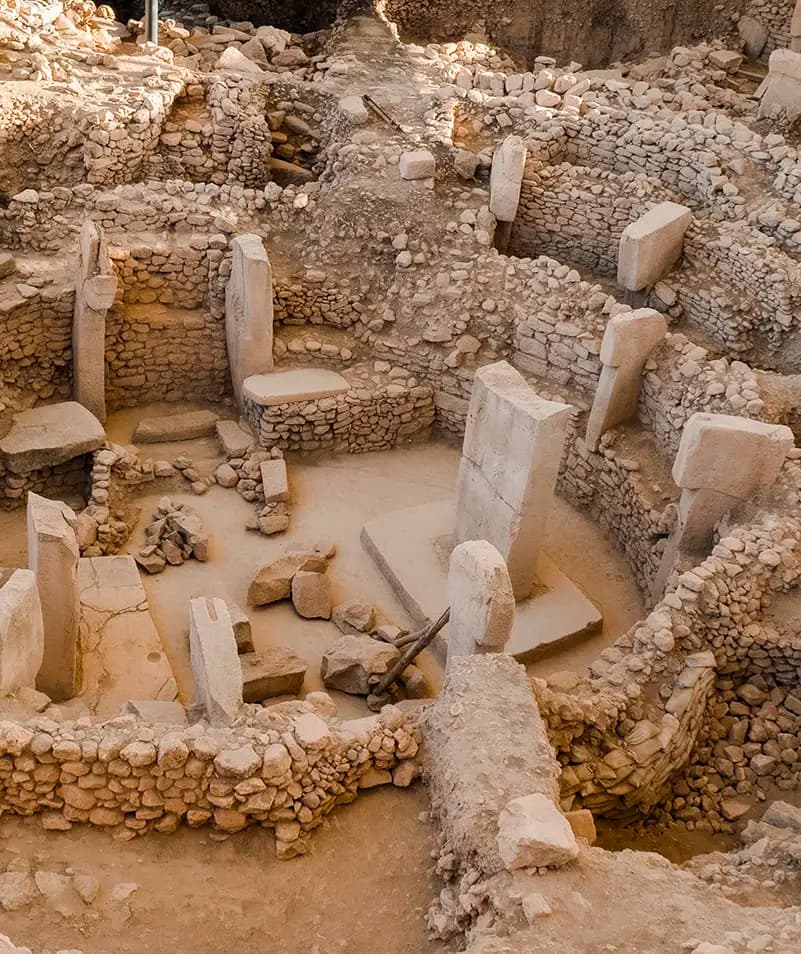
Göbeklitepe is an archaeological site atop a hill about 15 kilometers northeast of Şanlıurfa, near the village of Örencik. The structures are believed to date to 9600-7300 BCE — roughly 11,000 to 12,000 years ago — making it the oldest known monumental temple complex.
The site was first noticed in 1963 during a joint survey by Istanbul and Chicago universities, but its true significance emerged only with the excavations begun in 1995 by German archaeologist Klaus Schmidt. Schmidt's findings reversed the long-accepted order of "farming first, then temples": monumental structures were found here that were built by hunter-gatherer communities before farming and settled life began.
Göbeklitepe was inscribed on the UNESCO World Heritage List in 2018. Six monumental structures have been uncovered so far, though geomagnetic surveys suggest the total could be close to twenty.
Highlights
T-shaped pillars
At the center of circular/oval structures up to 30 meters in diameter stand limestone pillars nearly 5 meters tall. Archaeologists believe these pillars represent stylized human figures.
Animal reliefs
Animal figures such as snakes, scorpions, foxes, and wild boars are carved in relief on the pillars.
Built before farming
The builders were not yet practicing agriculture — evidence that organized collective work was possible before farming began.
Deliberate burial
At some point the structures were deliberately buried under earth and rubble; the reason remains debated.