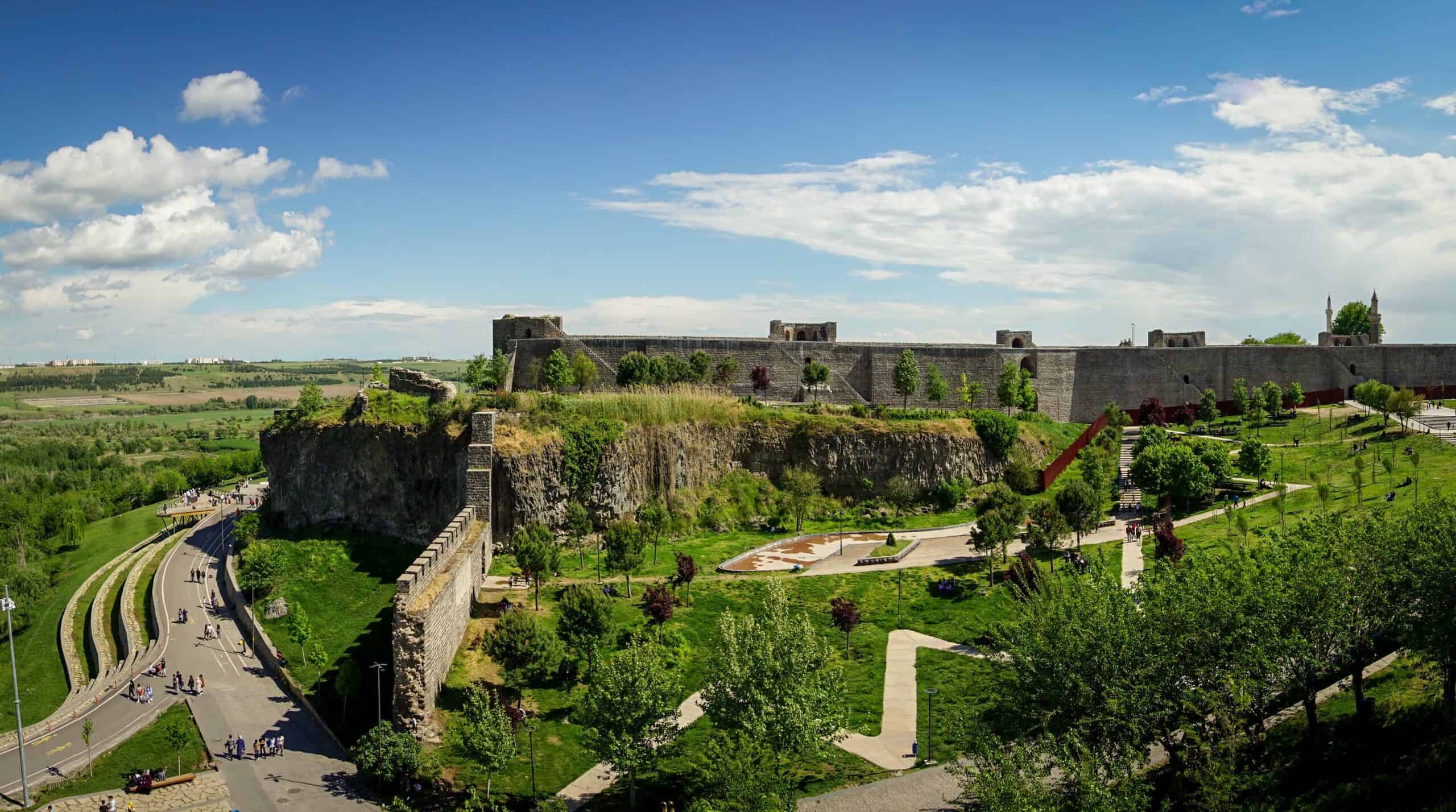
The historic core of Diyarbakır, the Amida Mound within the citadel, shows that the city has been continuously settled since the 6th millennium BCE. The earliest known defensive structures were built by the Hurrians in the 4th millennium BCE; the foundations of today's walls were laid under Roman Emperor Constantius II in the 4th century.
In the following centuries the city passed through Roman, Sassanid, Byzantine, Umayyad, Abbasid, Marwanid, Seljuk, Artuqid, Aq Qoyunlu, Safavid, and Ottoman rule — each leaving its mark on the walls and the city. Diyarbakır Fortress and the Hevsel Gardens were inscribed on the UNESCO World Heritage List in 2015 as a "cultural landscape."
Highlights
5,800-meter city walls
Regarded as one of the longest surviving city walls in the world after the Great Wall of China; they bear 82 towers and inscriptions from 63 different periods.
Hevsel Gardens
About 700 hectares of agricultural and natural land between the Tigris and the walls; home to more than 180 bird species.
Ten-Eyed Bridge
The historic bridge over the Tigris is linked to the city's water and transport systems.
Multi-layered architecture
Roman, Artuqid, Aq Qoyunlu, and Ottoman-era structures stand side by side within the same walls.
Living Today
Who lives on this land today — what they cook, what they tell.
Hevsel'de Sabah
Surların dibindeki Hevsel Bahçeleri'nde aileler hâlâ sebze yetiştirir. Aynı toprak binlerce yıldır ekiliyor; şehir değişti, bahçe değişmedi.
Karpuz ve Dicle
Yaz akşamları Dicle kıyısında karpuz kesilir, çay demlenir. Sohbet uzar — burada acele etmek ayıp sayılır.
Dengbêj'in Sesi
Dengbêj, sazsız söyleyen anlatıcıdır; tarihi, aşkı ve yası ezberden aktarır. Sur içindeki dengbêj evlerinde bu gelenek hâlâ canlı.